A Winter Visitor Brings Ancient Fishing Skills to the Island’s Wetlands
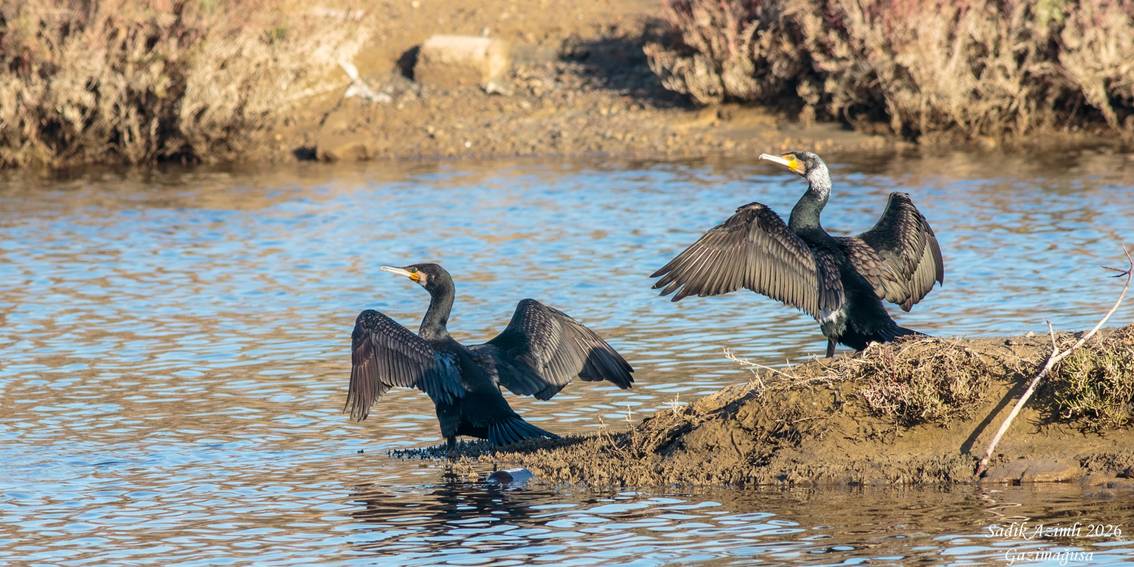
The Great Cormorant is a large bird; dark shape stands motionless on a rock by the water’s edge. With wings outstretched like a living coat of arms, it waits. This striking silhouette belongs to the Great Cormorant (Phalacrocorax carbo), a skilled fisherman that visits Cyprus each winter . Its prehistoric appearance and expert diving ability make it a fascinating sight across the island’s wetlands and coasts.
A Winter Visitor to Cyprus
The Great Cormorant visits Cyprus mainly during the winter months. It arrives in autumn, stays through the cold season, and departs in spring . Birdwatchers can also spot it during autumn and spring migration as it passes through the island. Unlike its relative the European Shag (Phalacrocorax aristotelis desmarestii), which nests and breeds on the island, the Great Cormorant does not breed in Cyprus . It comes purely for the rich fishing grounds that Cypriot wetlands provide.
Appearance and Identification
The Great Cormorant presents an unmistakable profile. It measures 77 to 100 centimetres in length with an impressive wingspan of 121 to 160 centimetres . Adults weigh between 2 and 3.7 kilograms . Its plumage appears largely black, but closer inspection reveals a metallic blue-green iridescence on the wings and body . A stout, hooked bill in dark grey features a bare patch of yellow skin at the base, surrounded by white feathers . During the breeding season, adults develop short white plumes on the head and neck, along with distinctive white patches on each thigh . In winter, this white ornamentation disappears, leaving a more uniformly black appearance . Juveniles and immature birds show paler, brownish underparts and do not gain full adult plumage until three or four years old .
Why They Spread Their Wings
One of the most characteristic sights involves a cormorant standing with wings half-open, facing the sun. This behaviour serves a vital purpose. Unlike many waterbirds, the Great Cormorant’s feathers lack complete waterproofing . This allows water to penetrate the plumage, reducing buoyancy and enabling the bird to dive deeply and swim efficiently underwater. The trade-off means the feathers become waterlogged, so the bird must dry them after fishing trips. It holds its wings outstretched to let the air and sun do their work .
Expert Underwater Hunters
The Great Cormorant hunts exclusively in water. It dives from the surface, propelling itself with powerful webbed feet and steering with its tail . It tucks its wings close to its body to reduce drag. Dives typically last 20 to 50 seconds, though the bird can stay submerged longer when necessary . It pursues prey in shallow waters, both in the sea and in freshwater lakes and rivers . Its diet consists mainly of fish, but it also takes crustaceans, amphibians, molluscs, and occasionally even small nesting birds . The bird usually fishes alone but may form large feeding flocks in areas rich with prey .
The Journey of Iris
In 2024, a Great Cormorant named Iris captured the attention of BirdLife Cyprus. Scientists fitted Iris with a sensor on her foot in February to track her movements. Over three days, she covered almost 500 kilometres. She began her journey from her native Akamas Peninsula, travelled to Limassol, returned to the peninsula, and then flew along the northern coast of Cyprus to Protaras and Ayia Napa . This represented the furthest journey ever recorded for cormorants using sensors, as most spend their time within about 500 metres of their birthplace . The project, in cooperation with the Game Management Service, helps researchers understand breeding and feeding areas and identify threats these birds face .
Where to See Them in Cyprus
Birdwatchers can find Great Cormorants at natural wetlands, dams, and along the coast during migration . They prefer shallow waters where they can hunt effectively. Good locations include large reservoirs, coastal estuaries, and freshwater lakes across the island. When not fishing, they rest on rocks, sandbanks, or trees near water, often in the company of other waterbirds .
A Protected Species
The Great Cormorant holds a conservation status of Least Concern globally and in Europe . The European population numbers between 401,000 and 512,000 breeding pairs . However, the species does face threats. Bycatch in fishing gear poses a significant danger . Other threats include hunting, persecution by the aquaculture industry, oil spills, and disturbance at breeding colonies . The species enjoys protection under the Bern Convention (Annex III), the EU Birds Directive (Annex I), and the African Eurasian Waterbird Agreement . It is illegal to disturb, capture, or kill cormorants except under specific derogation .
Adaptations for Underwater Life
The Great Cormorant possesses remarkable adaptations for its aquatic lifestyle. Unlike humans, cormorants can rotate their eyes, providing excellent vision both above and below water . Recent research suggests they may also have excellent underwater hearing, using sound to locate prey in murky water where visibility limits sight . Their wettable plumage, while requiring drying time, allows them to overcome buoyancy and pursue fish at depth. Their powerful legs and fully webbed feet (with webbing between all four toes) provide thrust for chasing fast-moving prey .
A Living Link to Ancient Traditions
Across Eurasia, humans have long recognised the cormorant’s fishing prowess. In China, a tradition spanning centuries involved fishermen using tame cormorants to catch fish. The birds would wear loose rings around their necks to prevent swallowing larger catches, and they would return the fish to the boat in exchange for small rewards . While this ancient practice fades today, it testifies to the enduring relationship between humans and these skilled avian fishermen. In Cyprus, we can appreciate them as wild visitors, bringing their ancient skills to our winter wetlands each year.
A Winter Visitor Brings Ancient Fishing Skills to the Island’s Wetlands
A large, dark shape stands motionless on a rock by the water’s edge. With wings outstretched like a living coat of arms, it waits. This striking silhouette belongs to the Great Cormorant (Phalacrocorax carbo), a skilled fisherman that visits Cyprus each winter. Its prehistoric appearance and expert diving ability make it a fascinating sight across the island’s wetlands and coasts.
A Winter Visitor to Cyprus
The Great Cormorant visits Cyprus mainly during the winter months. It arrives in autumn, stays through the cold season, and departs in spring. Birdwatchers can also spot it during autumn and spring migration as it passes through the island. Unlike its relative the European Shag (Phalacrocorax aristotelis desmarestii), which nests and breeds on the island, the Great Cormorant does not breed in Cyprus. It comes purely for the rich fishing grounds that Cypriot wetlands provide.
Appearance and Identification
The Great Cormorant presents an unmistakable profile. It measures 77 to 100 centimetres in length with an impressive wingspan of 121 to 160 centimetres. Adults weigh between 2 and 3.7 kilograms. Its plumage appears largely black, but closer inspection reveals a metallic blue-green iridescence on the wings and body. A stout, hooked bill in dark grey features a bare patch of yellow skin at the base, surrounded by white feathers. During the breeding season, adults develop short white plumes on the head and neck, along with distinctive white patches on each thigh. In winter, this white ornamentation disappears, leaving a more uniformly black appearance. Juveniles and immature birds show paler, brownish under parts and do not gain full adult plumage until three or four years old.
Why They Spread Their Wings
One of the most characteristic sights involves a cormorant standing with wings half-open, facing the sun. This behaviour serves a vital purpose. Unlike many water birds, the Great Cormorant’s feathers lack complete waterproofing . This allows water to penetrate the plumage, reducing buoyancy and enabling the bird to dive deeply and swim efficiently underwater. The trade-off means the feathers become waterlogged, so the bird must dry them after fishing trips. It holds its wings outstretched to let the air and sun do their work.
Expert Underwater Hunters
The Great Cormorant hunts exclusively in water. It dives from the surface, propelling itself with powerful webbed feet and steering with its tail. It tucks its wings close to its body to reduce drag. Dives typically last 20 to 50 seconds, though the bird can stay submerged longer when necessary. It pursues prey in shallow waters, both in the sea and in freshwater lakes and rivers. Its diet consists mainly of fish, but it also takes crustaceans, amphibians, molluscs, and occasionally even small nesting birds. The bird usually fishes alone but may form large feeding flocks in areas rich with prey.
The Journey of Iris
In 2024, a Great Cormorant named Iris captured the attention of BirdLife Cyprus. Scientists fitted Iris with a sensor on her foot in February to track her movements. Over three days, she covered almost 500 kilometres. She began her journey from her native Akamas Peninsula, travelled to Limassol, returned to the peninsula, and then flew along the northern coast of Cyprus to Protaras and Ayia Napa. This represented the furthest journey ever recorded for cormorants using sensors, as most spend their time within about 500 metres of their birthplace. The project, in cooperation with the Game Management Service, helps researchers understand breeding and feeding areas and identify threats these birds face.
Where to See Them in Cyprus
Birdwatchers can find Great Cormorants at natural wetlands, dams, and along the coast during migration. They prefer shallow waters where they can hunt effectively. Good locations include large reservoirs, coastal estuaries, and freshwater lakes across the island. When not fishing, they rest on rocks, sandbanks, or trees near water, often in the company of other water birds.
A Protected Species
The Great Cormorant holds a conservation status of Least Concern globally and in Europe. The European population numbers between 401,000 and 512,000 breeding pairs. However, the species does face threats. Bycatch in fishing gear poses a significant danger. Other threats include hunting, persecution by the aquaculture industry, oil spills, and disturbance at breeding colonies. The species enjoys protection under the Bern Convention (Annex III), the EU Birds Directive (Annex I), and the African Eurasian Water bird Agreement. It is illegal to disturb, capture, or kill cormorants except under specific derogation.
Adaptations for Underwater Life
The Great Cormorant possesses remarkable adaptations for its aquatic lifestyle. Unlike humans, cormorants can rotate their eyes, providing excellent vision both above and below water. Recent research suggests they may also have excellent underwater hearing, using sound to locate prey in murky water where visibility limits sight. Their wettable plumage, while requiring drying time, allows them to overcome buoyancy and pursue fish at depth. Their powerful legs and fully webbed feet (with webbing between all four toes) provide thrust for chasing fast-moving prey.
A Living Link to Ancient Traditions
Across Eurasia, humans have long recognised the cormorant’s fishing prowess. In China, a tradition spanning centuries involved fishermen using tame cormorants to catch fish. The birds would wear loose rings around their necks to prevent swallowing larger catches, and they would return the fish to the boat in exchange for small rewards. While this ancient practice fades today, it testifies to the enduring relationship between humans and these skilled avian fishermen. In Cyprus, we can appreciate them as wild visitors, bringing their ancient skills to our winter wetlands each year.