A Thistle with a Holy Legend
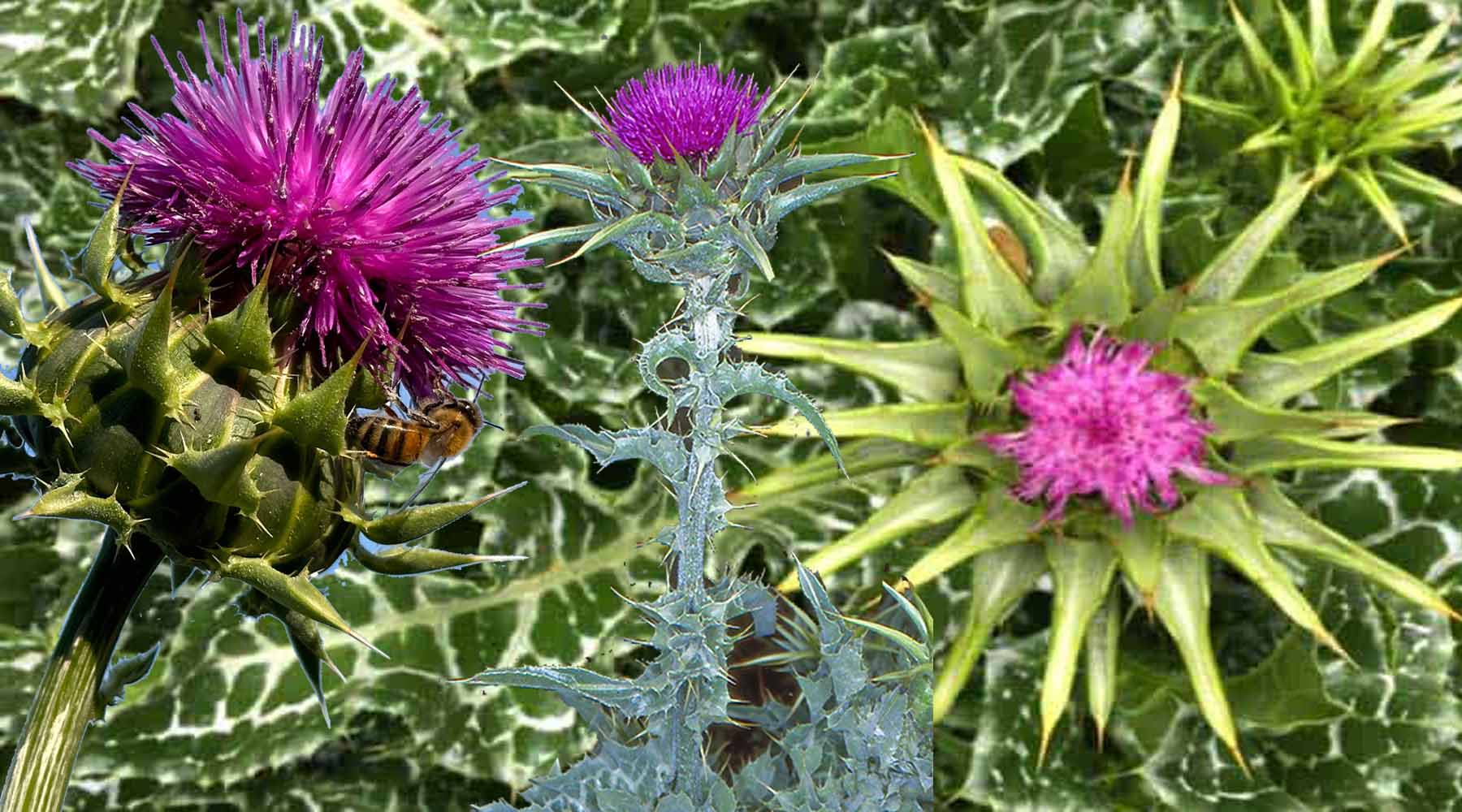
The Milk Thistle flower (Silybum marianum) stands as one of the most striking and useful wild plants of the Cypriot countryside. Cypriots know it by the common name Γαιδουράγκαθο (Gaidourankatho), though researchers have also recorded the local name γαουρόκαυλος (gaourokavlos) in traditional communities and monasteries. The plant takes its English name from the distinctive white veins on its leaves, which legend attributes to a drop of the Virgin Mary’s milk falling upon them.
Appearance and Identification
The Milk Thistle flower grows as an annual or biennial plant, reaching heights of 30 to 200 centimetres with an overall conical shape up to 160 centimetres wide at the base. The hollow, grooved stem supports large oblong to lanceolate leaves that display a unique and beautiful feature: shiny green surfaces with striking milk-white veins running through them.
From June to August, the plant produces magnificent flower heads of red-purple colour, measuring 4 to 12 centimetres long and wide. Spiny bracts with stout yellow spines surround each flower head, giving the plant its characteristic thistle appearance.
Distribution and Habitat in Cyprus
The Milk Thistle enjoys native status in Cyprus, forming part of the island’s natural Mediterranean flora. It grows throughout the region from Macaronesia and the Mediterranean to Central Asia. In Cyprus, visitors can spot these plants blooming alongside roads and tracks in early summer, their purple flowers brightening the landscape before turning into the familiar thistle-down that carries seeds on the late summer winds.
Traditional and Culinary Uses
Cypriot tradition values this spiny plant for both food and medicine. The young shoots and leaves provide nutritious wild greens, which foragers collect before the spines harden. After trimming the prickles, people boil the leaves as a spinach substitute or add them raw to salads. The base of the flower head tastes remarkably similar to artichoke when cooked. Even the roots offer food value, whether eaten raw or boiled and buttered.
Medicinal Properties
The tiny seeds of the Milk Thistle contain the true treasure of this plant: a chemical compound called silymarin. This substance plays an important role in protecting and repairing the liver. Traditional medicine has used Milk Thistle for centuries to treat jaundice and liver disorders, and research shows that silymarin administered promptly after death-cap mushroom poisoning can counteract the toxic effects.
Modern applications include protecting the liver from chemotherapy effects and potentially preventing gallstone formation by increasing bile solubility. The extract from seeds contains approximately 4–6% silymarin, along with beneficial fatty acids.
Ecological Considerations
While native to Cyprus and the Mediterranean, the Milk Thistle has spread throughout the world as an introduced species. It now grows in North America, Australia, New Zealand, and many other regions where it sometimes behaves as an invasive weed. The plant prefers sunny, warm locations with regularly disturbed ground, such as roadsides, pastures, and fallow land.
Despite its beauty and usefulness, farmers should note that the plant contains potassium nitrate, which can prove toxic to cattle and sheep if consumed in large quantities. Ruminant animals break down this chemical into nitrite ions that interfere with oxygen transport in the blood.