
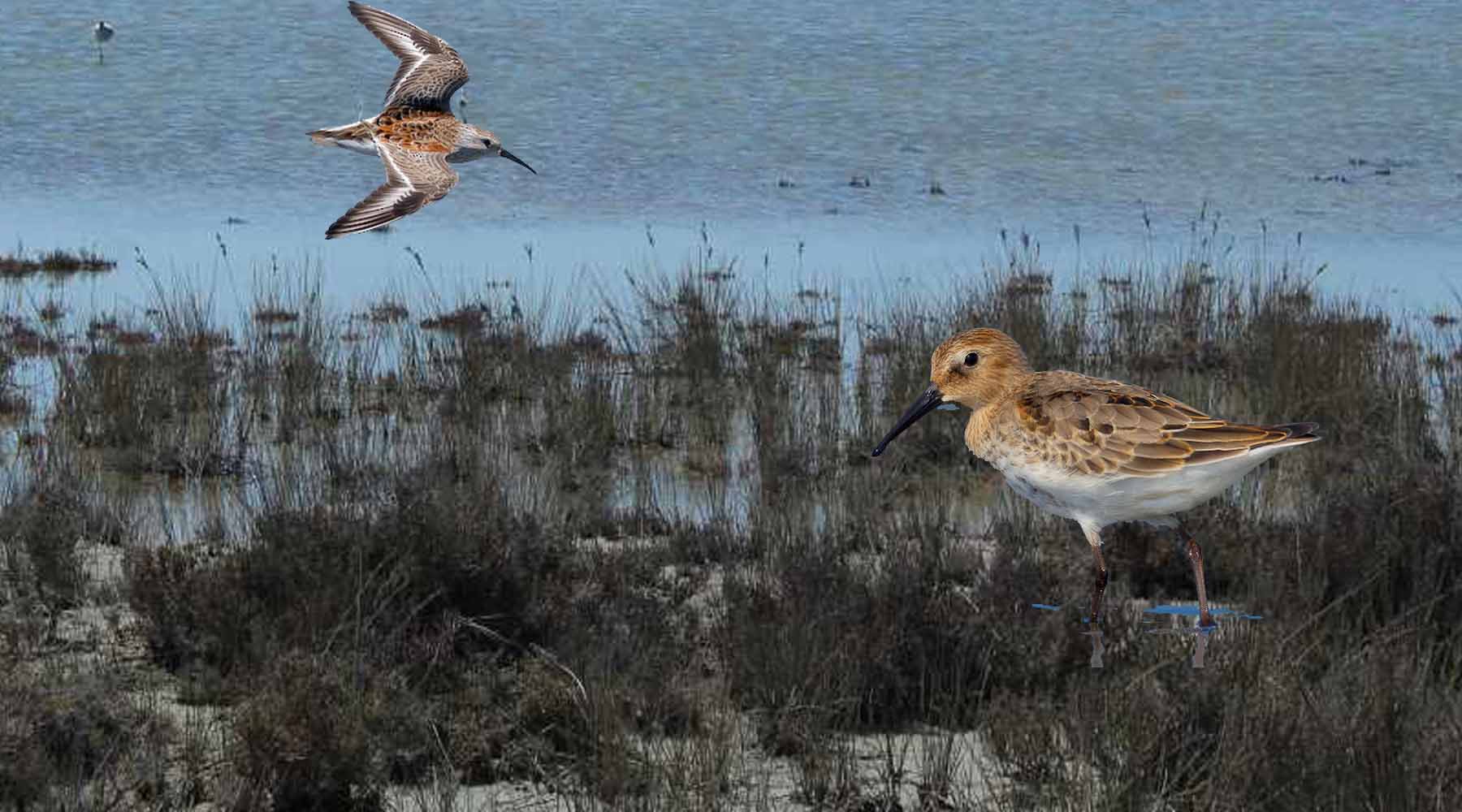
A Familiar Face Among Northern Shorebirds
The Calidris alpine-Λασποσκαλίδρα ranks among the most familiar and abundant small waders across the Northern Hemisphere. Known in Cyprus as Λασποσκαλίδρα (Laskoskalídra), this remarkable shorebird undertakes epic migratory journeys and displays one of the most distinctive breeding plumages in the bird world.
Appearance and Identification
The Dunlin changes appearance dramatically between seasons. During spring and summer, breeding adults display a bold, unmistakable black patch on their belly and a rich rufous back. No other similar-sized wader possesses this feature. In winter, the birds become much plainer, appearing grey above and white below.
This species measures 17-21 centimetres in length, with a wingspan of 32-36 centimetres. It resembles a common starling in size but appears stouter, with a noticeably longer and thicker bill. The black legs and slightly downward-curved bill provide key identification features throughout the year. A narrow white wing bar shows clearly when the birds take flight.
Behaviour and Feeding Habits
Dunlins exhibit a characteristic feeding behaviour that birdwatchers easily recognise. They move along muddy shores with a rapid, methodical “sewing machine” action, constantly probing the substrate for food. This tireless foraging reflects their high energy needs during migration and winter.
On coastal mudflats, they hunt for molluscs, worms, and small crustaceans. During the breeding season in Arctic regions, they switch mainly to insects.
These birds demonstrate strong social behaviour outside the breeding season. They form large, often spectacular flocks on coastal wetlands. These flocks twist and turn in synchronised flight, creating swirling shapes against the sky – a breathtaking natural spectacle.
Distribution and Migration
The Calidris alpine-Λασποσκαλίδρα enjoys a circumpolar breeding distribution, nesting across Arctic and subarctic regions of Europe, Asia, and North America. Ornithologists recognise ten distinct subspecies, which differ slightly in size, bill length, and breeding plumage details.
Migratory patterns vary across populations. Birds breeding in Western Europe travel relatively short distances to winter on southern European and northwest African coasts. Those from northern Europe and Asia undertake enormous journeys to reach wintering grounds in Africa, southeast Asia, and the Middle East.
The Dunlin in Cyprus
Cyprus provides an important stopover site for Dunlins during their spring and autumn migrations. Birdwatchers visiting the island’s coastal wetlands, particularly the Akrotiri Salt Lake area and Lady’s Mile, encounter these birds feeding alongside other waders such as Little Stints, Curlew Sandpipers, and Kentish Plovers.
During spring passage, observers may see Dunlins approaching their striking summer plumage, with the black belly patch beginning to show. These birds pause on Cypriot wetlands to rest and feed, building energy reserves for the next leg of their long journey northward to Arctic breeding grounds.
Conservation Status
The Dunlin maintains a large global population and extensive range. The International Union for Conservation of Nature classifies the species as “Least Concern”. However, some populations face serious pressures. The southern subspecies Calidris alpina schinzii has declined dramatically in parts of its range, with numbers in Denmark falling from 50,000 pairs a century ago to just 95 pairs in 2021.
The species benefits from international protection under the Agreement on the Conservation of African-Eurasian Migratory Waterbirds (AEWA). Continued monitoring remains essential, particularly for the smaller, vulnerable subspecies at the southern edges of their ranges.