A Large and Vocal Thrush
The Mistle Thrush Tsichla is a bird species belonging to the thrush family (Tsichla). In Cyprus is also known by the name Tsartsara or Gerakotsichla. It ranks as one of the largest members of its family in Europe and is renowned for its powerful song. You can hear its loud, fluty notes even in poor weather conditions, a trait that has earned it the fitting nickname “stormcock.”
The Singing Sentinel of Winter
The Mistle Thrush is one of the largest and most distinctive members of the thrush family found across Europe. A robust and boldly spotted bird, it commands attention with its powerful voice and assertive behaviour. You will often spot it foraging alone or in pairs across open countryside, parks, and large gardens.
Identifying Features
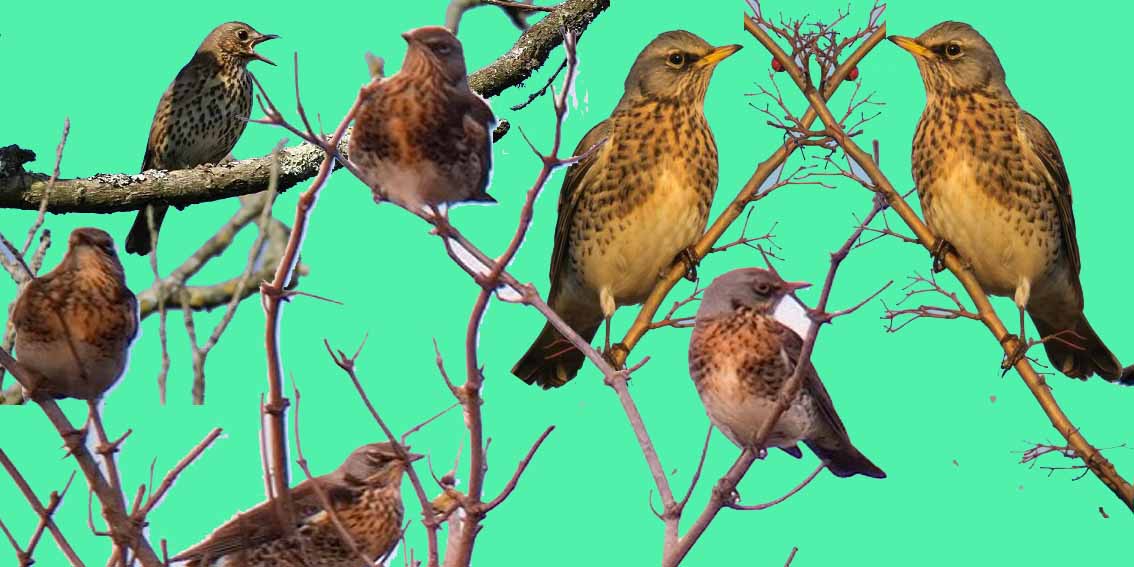
The Mistle Thrush is a striking bird, noticeably larger and paler than its relative the Song Thrush. It has greyish-brown upperparts and a white underside heavily marked with round, dark brown spots. These spots often merge into a more solid patch on the breast. In flight, you can clearly see the white tips on its outer tail feathers and the pale whitish underwing, which helps distinguish it from other thrushes. Both sexes share a similar appearance.
Preferred Habitat
This thrush favours a mix of woodland edges, parklands, and open countryside with scattered trees. It adapts well to cultivated areas and has become a common visitor to larger gardens, orchards, and churchyards. Unlike the closely related Blackbird, the Mistle Thrush prefers more open spaces with short grass for feeding. It typically avoids dense, closed-canopy forests.
Diet and Feeding Habits
The Mistle Thrush has a varied diet that changes with the seasons. During spring and summer, it feeds mainly on earthworms, insects, and snails, which it catches by running and stopping abruptly across lawns and fields. In autumn and winter, it turns to fruit and berries. As its name suggests, it has a particular fondness for the sticky white berries of mistletoe. It will vigorously defend a berry-bearing bush or tree throughout the winter, chasing away other birds that try to share its food source.
Breeding Behaviour
The Mistle Thrush builds its nest early in the year, often from February onwards. The female constructs a large, bulky nest of grass, moss, and twigs, lining it with mud and fine grass. She places it in the fork of a tree, often quite high up, or against the trunk. She lays 3-5 pale blue eggs with faint reddish spots and incubates them for around two weeks. The male defends the nest site fiercely, fearlessly attacking larger birds and even squirrels that venture too close. This boldness has earned it the reputation of a courageous guardian.
Song and Calls
The Mistle Thrush possesses a loud, far-carrying song, often delivered from a high treetop. Its fluty phrases sound wild and melancholic, repeating each note several times. It sings most powerfully in early spring, often during wet and windy weather. This habit of singing through storms has given it the folk name “Stormcock.” Its call is a harsh, dry rattling sound, like a machine gun, which it uses when alarmed or taking flight.
Conservation Status
The Mistle Thrush remains a widespread resident across the UK and Europe. However, its population has experienced some declines in recent decades, likely due to changes in agricultural practices and habitat loss. It currently holds Amber conservation status in the UK, meaning it is a species of moderate concern requiring monitoring.