The Greek Force in Cyprus
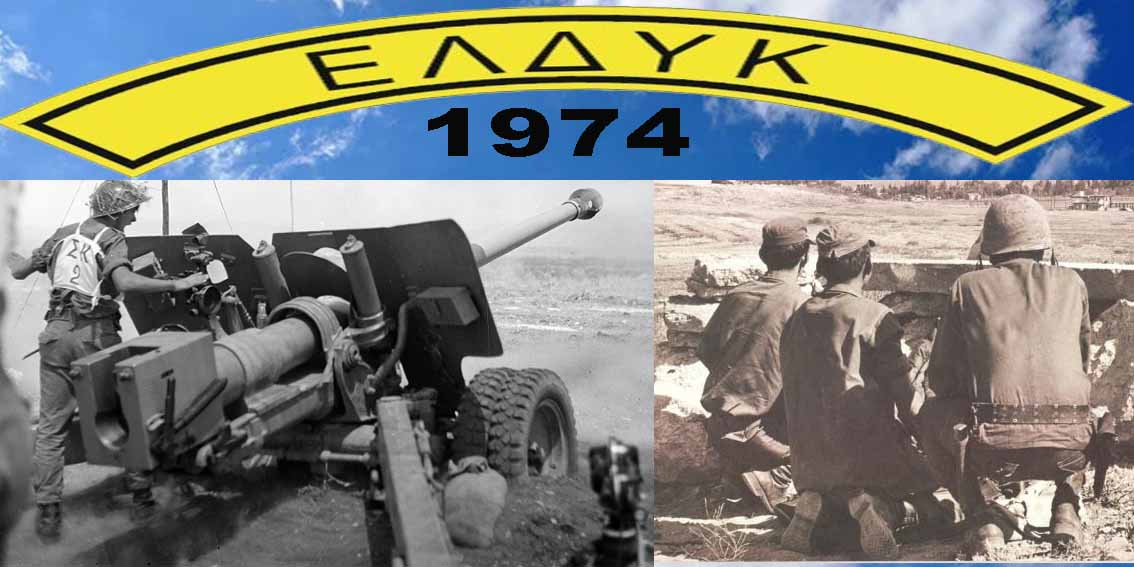
ELDYK (Hellenic Force in Cyprus) operated as a Greek regiment stationed on the island under the 1960 Zurich and London Agreements. The agreements also placed a Turkish regiment, TOURDYK, on the island as a guarantor force. ELDYK maintained its camp near Nicosia International Airport, just five hundred meters from the Turkish contingent. During peacetime, the force kept a low profile and avoided involvement in intercommunal tensions.
The Invasion Begins
Turkish forces launched their invasion on July 20, 1974. That night, ELDYK received orders to advance toward Kioneli. The regiment moved out but lacked adequate fire support. Without artillery cover or air support, they could not achieve their objective. They withdrew with few casualties, but the failure to reach their target carried heavy strategic costs.
The Betrayal: Abandoned on the Shores
The bitter accusation “We were not defeated… We were betrayed” echoes the belief that political and military leadership abandoned Kyrenia’s defenders. When Turkish troops landed on the northern coast, they met almost no organized resistance. The National Guard’s General Staff made a critical error: they prioritized breaking the Agirtas pocket instead of stopping the beach landings. The 187 Field Artillery Squadron received orders to fire on the Agirtas enclave rather than against the Turkish landing craft. Twenty-six other guns also fired inland. Consequently, only a few shells hit the beach where Turkish forces were disembarking. This disastrous command decision allowed the invaders to establish a bridgehead and reinforce their position virtually unopposed.
The Final Battle
Turkish tanks approached the ELDYK camp on August 14, 1974. They attacked in three successive waves. ELDYK soldiers repelled each assault. The next day, the Turks launched two more attacks. The Greek defenders held their ground repeatedly. They fought with extraordinary courage despite dwindling ammunition and no reinforcements. The camp finally fell on August 16. But the regiment had inflicted severe casualties on the enemy, destroying numerous tanks and killing many Turkish soldiers.
A Legacy of Courage and Bitterness
The soldiers of ELDYK gave their lives for Cyprus. In July 2025, fifty-one years after the invasion, the remains of sixteen fallen Greek soldiers finally returned to Greece for proper burial. The Deputy Minister of National Defence attended the ceremony and laid a wreath in their honour. Yet the survivors also carry deep wounds. The Greek state initially refused to recognize that ELDYK veterans had served in a war. For twenty-four years, from 1974 to 1998, the government did not acknowledge their military service. Veterans endured decades of court battles to prove the obvious: they fought, they bled, and they lost comrades on Cypriot soil.
The Verdict of History
ELDYK did not surrender. ELDYK did not break. ELDYK ran out of options while leaders in the rear made catastrophic decisions. The soldiers kept fighting until the ammunition ran dry and the enemy overran their positions. The accusation of betrayal—whether directed at the National Guard command, the Greek junta, or NATO powers—remains a central part of their testimony. These men were not pawns moved passively across a chessboard. They chose to fight. They chose to hold the line. And they chose to die defending Cyprus, even when their own leadership had already abandoned them.