Introduction and Botanical Identity
The Arabis alpina, often historically misspelled as Arabis albina, is a resilient and decorative perennial wild flower. Botanists and gardeners commonly refer to it as the Alpine Rock Cress or Mountain Rock Cress. This species belongs to the Brassicaceae family, linking it to garden staples like cabbage and mustard. Its native range spans an impressive geographical area, from the mountainous regions of Europe and Asia to the highlands of East Africa and even parts of North America.
Physical Characteristics and Appearance
This plant exhibits a low-growing, mat-forming habit. It typically reaches a height of 4 to 10 inches, but its spread can extend up to 20 inches wide, making it an excellent ground cover for rocky areas. The foliage forms a basal rosette at the base. These basal leaves are oblong or spoon-shaped with noticeable teeth along the margins. Fine, star-shaped hairs cover the leaves entirely, giving the foliage a distinctive grey-green, almost hoary texture.
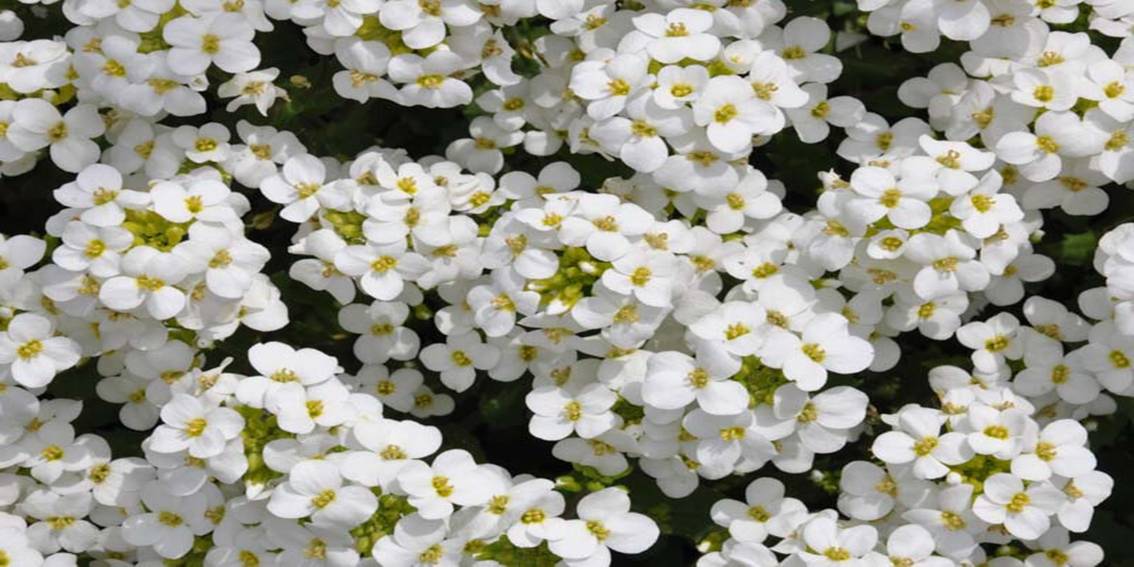
The flowering stems rise upright from the mat in spring. From April through May, loose clusters of flowers adorn the tips of these stems. Each individual flower consists of four pure white petals arranged in a perfect cross shape, a defining characteristic of the Brassicaceae family, with a cluster of bright yellow stamens in the centre. Following the flowering period, the plant produces slender, erect seed pods known as siliques, which contain the next generation of seeds.
Preferred Habitat and Growing Conditions
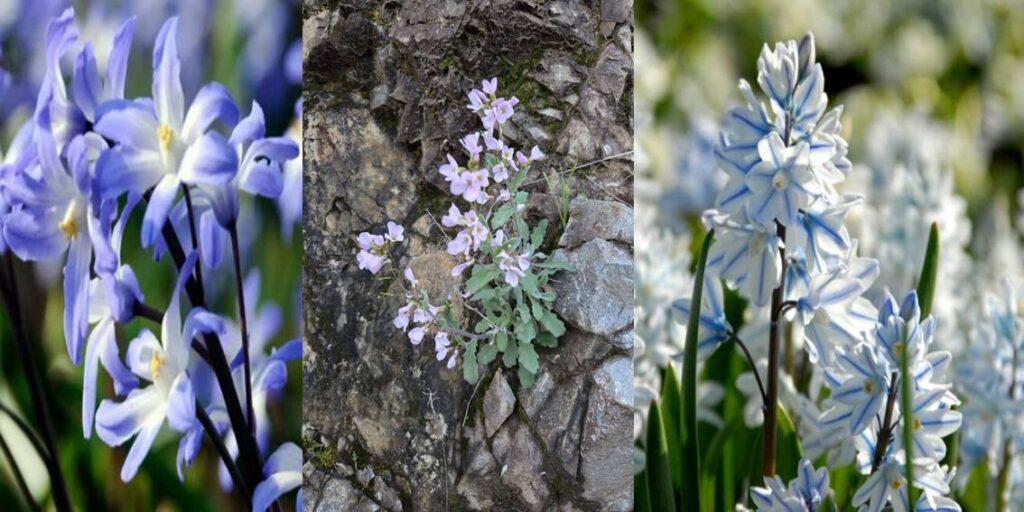
The Alpine Rock Cress thrives in environments that replicate its native alpine terrain. It naturally colonizes rocky screes, cliff crevices, and open, stony meadows, often where the bedrock is limestone. For successful growth, this plant demands a position in full sun to very light shade. The soil must provide sharp drainage, as the plant cannot tolerate waterlogged roots. It flourishes in poor, gritty, or sandy soils where many other plants would struggle. Its hardiness allows it to withstand freezing winter temperatures, though it often dislikes intense, prolonged summer heat.
Ecological Role and Garden Uses
In the wild, Arabis alpina serves an important ecological function. The early spring blooms provide a vital nectar source for emerging bees and other pollinators. The dense mat of foliage also offers shelter for small insects and helps stabilize loose soil on steep slopes.
In cultivation, this plant proves highly valuable for the rock garden, dry stone wall, or alpine trough. Gardeners value its ability to cascade over edges and suppress weeds with its dense growth. To maintain a tidy appearance and encourage further blooming, one should trim the plant back lightly after the main flowering period. This simple practice prevents the plant from becoming leggy and promotes healthy, compact growth for the following season.