A Community-Focused Crossing
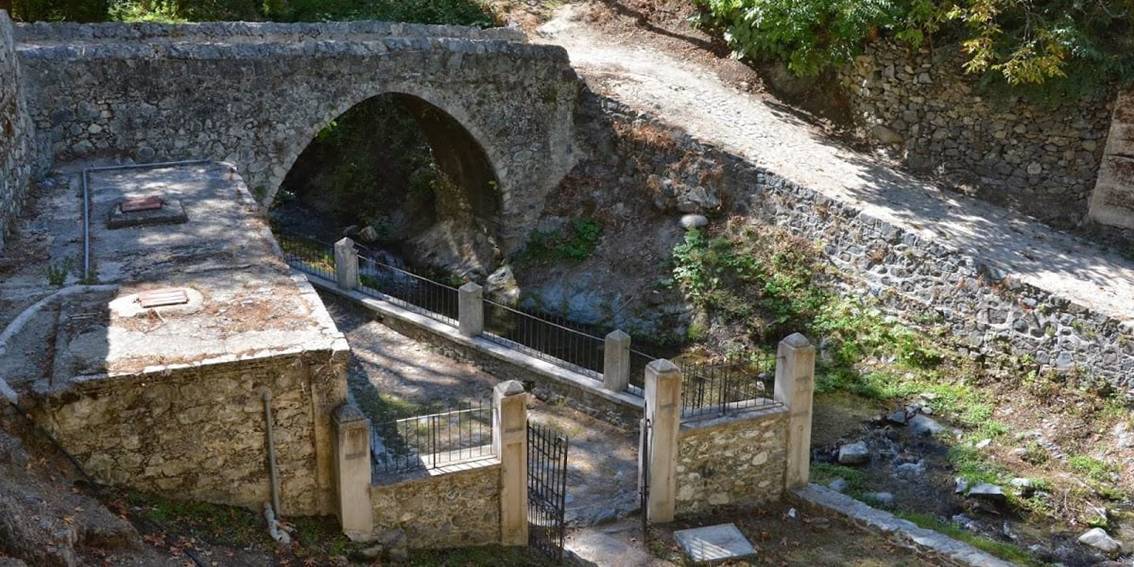
The Venetian bridge of Kalopanayiotis was commissioned by the rulers of Cyprus. They built it to serve the specific needs of this mountain village. Its primary function was to connect the two halves of the community that the Setrachos River divided. This reliable, stone crossing gave villagers secure access to their homes, fields, and the celebrated Monastery of Agios Ioannis Lampadistis. The bridge supported daily life, enabling the transport of goods and the movement of people within the settlement itself.
Architectural Integration
Builders constructed the bridge using local stone, ensuring it blended with the village’s traditional architecture. They designed a single, robust arch to span the river gorge. Its structure is solid and functional, with characteristic parapets lining the walkway. Unlike more isolated Venetian bridges, this one forms an integral part of the village’s fabric. It does not stand as a solitary monument but operates as a vital piece of community infrastructure, seamlessly woven into the network of old stone houses and cobbled paths.
The Heart of a Historic Village
For centuries, the bridge served as the literal and social center of Kalopanayiotis. Villagers used it constantly, crossing for work, worship, and community gatherings. It witnessed the daily rhythms of life, from farmers heading to terraced orchards to pilgrims visiting the monastery. The sound of the flowing Setrachos River below provided a constant backdrop. Its location made it a natural meeting point and a defining feature of the village’s identity, deeply embedded in local memory and tradition.
Contemporary Restoration and Role
In recent decades, Kalopanayiotis transformed into a renowned agrotourism destination. This revival highlighted the importance of the historic bridge. Careful restoration work strengthened its structure while preserving its original character. Today, the bridge no longer handles motor vehicles, but it thrives as a pedestrian thoroughfare. It is the picturesque focal point of the village, with cafes and traditional guesthouses overlooking its arch. The bridge guides visitors directly towards the UNESCO-listed monastery, making it the cornerstone of the cultural walking experience.
A Living Landmark
The Venetian Bridge of Kalopanayiotis offers a uniquely integrated historical experience. Visitors do not journey into a forest to find it; they simply stroll through the village. They can stand on its arch and gaze at the restored buildings clinging to the hillsides. They can hear the river below and observe daily life continuing around this ancient structure. It provides a perfect photo opportunity, framing views of the lush Marathasa Valley. The bridge embodies a successful synergy between cultural heritage preservation and sustainable community development.
Enduring Legacy
This bridge represents a slightly different Venetian legacy. It was not primarily for long-distance trade but for local cohesion. Its story is one of continuous utility and community identity. While other Venetian bridges fell into disuse, the one at Kalopanayiotis adapted and remained central. It stands not as a forgotten relic but as a actively maintained and used heirloom. The bridge demonstrates how historic infrastructure, when cherished and integrated, can remain the beating heart of a community for centuries, connecting both geography and generations.