Strategic Location and Purpose
The Venetian Bridge Trimiklini was commissioned in the late medieval period by Venetian engineers. They needed a durable structure to span the Kouris River, linking the villages of the Troodos foothills with the trade routes of the coastal plains. This crossing specifically facilitated the transport of agricultural goods, such as wine, wheat, and carobs, from fertile inland areas to markets. The bridge played a supportive, yet vital, role in the wider Venetian infrastructure network on the island.
A Classic Single-Arch Design
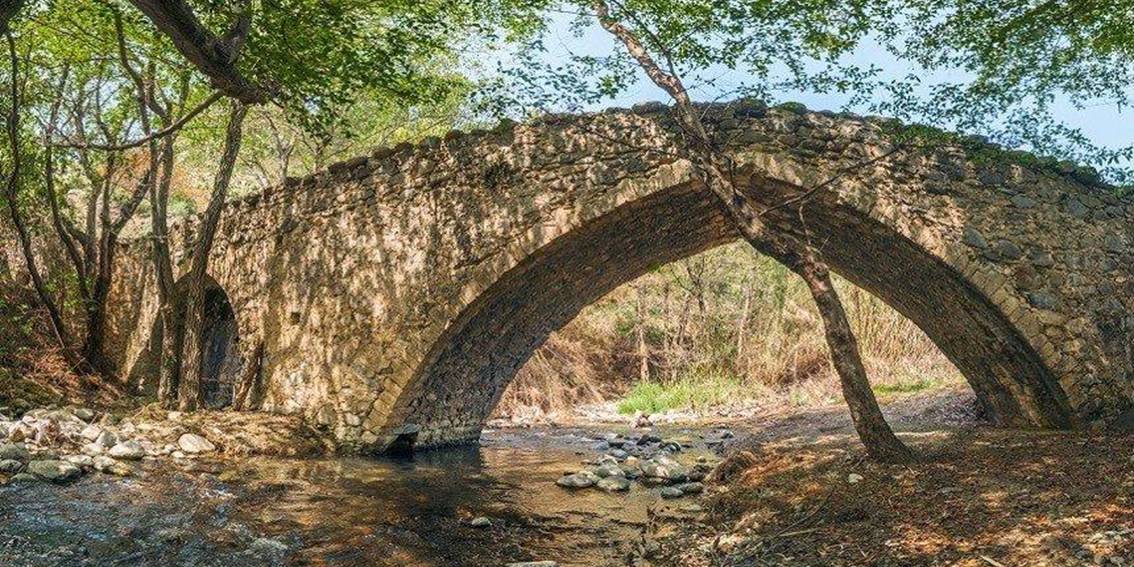
The bridge showcases the practical and elegant Venetian architectural style. Masons built it using the region’s characteristic limestone, forming a single, semi-circular arch that gracefully crosses the riverbed. The structure features modest, functional parapets that originally guided pack animals and pedestrians safely across. Its form prioritizes strength and utility, embodying the straightforward engineering principles that the Venetians applied throughout their Cypriot domain.
A History of Damage and Disrepair
Unlike some of its more isolated counterparts, the Trimiklini Bridge’s location exposed it to significant challenges. Seasonal floods, particularly from the Kouris River, repeatedly damaged its foundations over the centuries. Following the Venetian departure and the advent of modern roads, authorities largely neglected the old bridge. It fell into serious ruin, with much of its original stonework collapsing into the river, leaving only a fragment of its arch visible.
A Modern Reconstruction
In 2012, the Cyprus Department of Antiquities launched a major project to rescue the bridge from complete oblivion. Archaeologists and traditional stonemasons carefully studied the site and historical records. Using original techniques and materials, they meticulously reconstructed the fallen arch and rebuilt the parapets. This project did not create a perfect replica but faithfully restored the bridge’s form and structural integrity, saving an important piece of cultural heritage.
The Bridge Today and Its Significance
The restored Trimiklini Bridge now stands proudly in a tranquil, rural setting. While a modern concrete bridge handles all vehicle traffic nearby, the old Venetian span serves as a pedestrian monument and a poignant historical marker. Visitors can walk across its smooth, new-old stones and view informative plaques that detail its history. The surrounding area, with its reverie vegetation and views of the Troodos Mountains, offers a peaceful stop for travelers exploring the region’s Venetian legacy.
A Symbol of Cultural Preservation
The story of the Trimiklini Bridge underscores a proactive commitment to preserving Cypriot history. Its journey from near-total loss to careful reconstruction provides a powerful contrast to the untouched ruins of other Venetian monuments. The bridge no longer serves its original economic purpose, but it fulfills a new role as an educational site and a symbol of resilience. It demonstrates that cultural heritage is not only about preserving what survives, but also about thoughtfully reclaiming what time and nature have threatened to erase.