A Master of Deception
The Bee Orchid of Cyprus, known to scientists as Ophrys kotschyi, stands as one of the island’s most extraordinary and beautiful wildflowers. This remarkable plant earns its name from its intricate flower, which has evolved to mimic the appearance and scent of a female bee. As an endemic species, it grows nowhere else in the world except Cyprus, making it a true treasure of the island’s natural heritage.
The Deceptive Flower
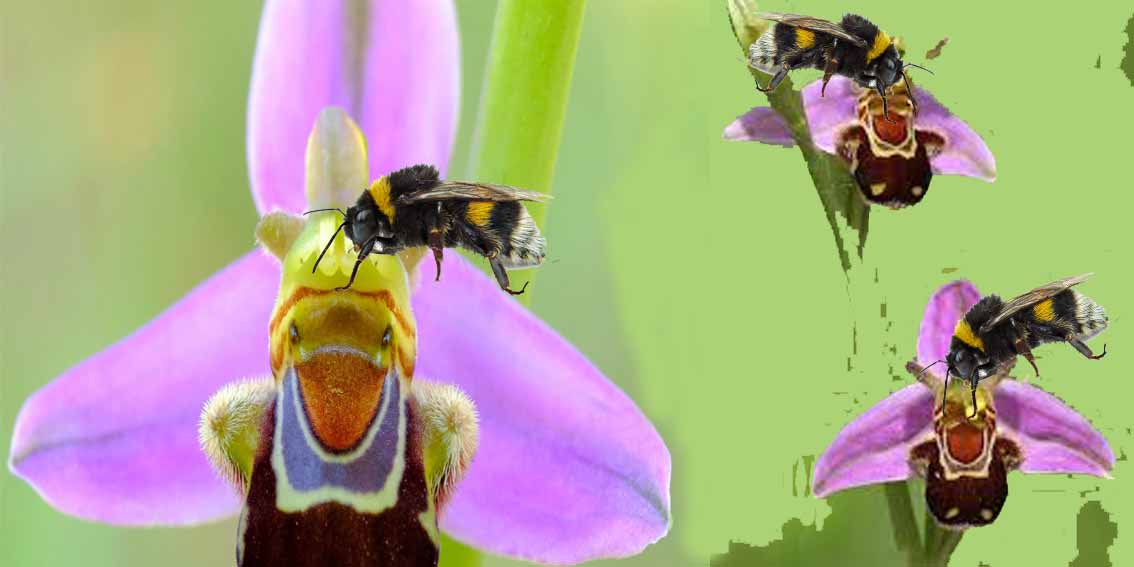
The flower’s most striking feature is its velvety, dark brown to purplish-black lip, which resembles the body of a female insect . A shiny, purplish marking adorns the centre of the lip, often forming a complex, H-shaped pattern bordered with white. The three upper sepals are green with brownish markings, while the two small, lateral petals are triangular and velvety, ranging from green to reddish-brown. Each plant produces between 2 to 10 large, vivid flowers on a loose spike, and it grows to a height of 10-40 cm. The blooming period runs from February to April, offering a short window to witness this floral marvel.
The Art of Pollination
The Cyprus Bee Orchid employs a fascinating trick to ensure its reproduction. It attracts male insects, specifically anthophorine bees of the genus Melecta, by mimicking the appearance and scent of a receptive female bee. The flower’s lip even feels fuzzy to the touch, enhancing the illusion. When a male bee lands on the flower in an attempt to mate, a process called pseudocopulation, he either picks up or deposits pollen sacs, thus pollinating the flower.
Where to Find It
This orchid favours dry to moist, calcareous soils in open and sunny positions. You can find it growing at altitudes from sea level up to 1000 metres. Look for it in a variety of habitats, including:
Poor grassland and meadows
Old, pesticide-free olive groves
Roadside verges and road banks
Garrigue and phrygana (low scrubland)
Open woodland, such as sparse pine forests
Specific locations where it occurs include the Akamas Peninsula, the areas of Mitsero-Agrokipia, Mammari-Deneia, and Agios Sozomenos, as well as the Larnaca Salt Lake area .
A Flower Under Threat
Despite its beauty and cunning, the Cyprus Bee Orchid faces an uncertain future. The IUCN lists it as “Near Threatened”. The main threats to its survival are human activities. Habitat loss, fragmentation, and degradation due to residential and tourist development, road construction, and land clearing pose the greatest dangers. Many populations grow on unprotected private land at low altitudes, making them especially vulnerable.
Conservation Efforts
To protect this emblematic species, authorities have designated several Special Areas of Conservation within the Natura 2000 network. These protected sites include areas in Mitsero-Agrokipia, Mammari-Deneia, and part of the Larnaca Salt Lake. The Cyprus Bee Orchid represents a living piece of the island’s unique biodiversity, and these conservation measures aim to ensure that its remarkable flowers continue to bloom for generations to come.