Early Life and Roots
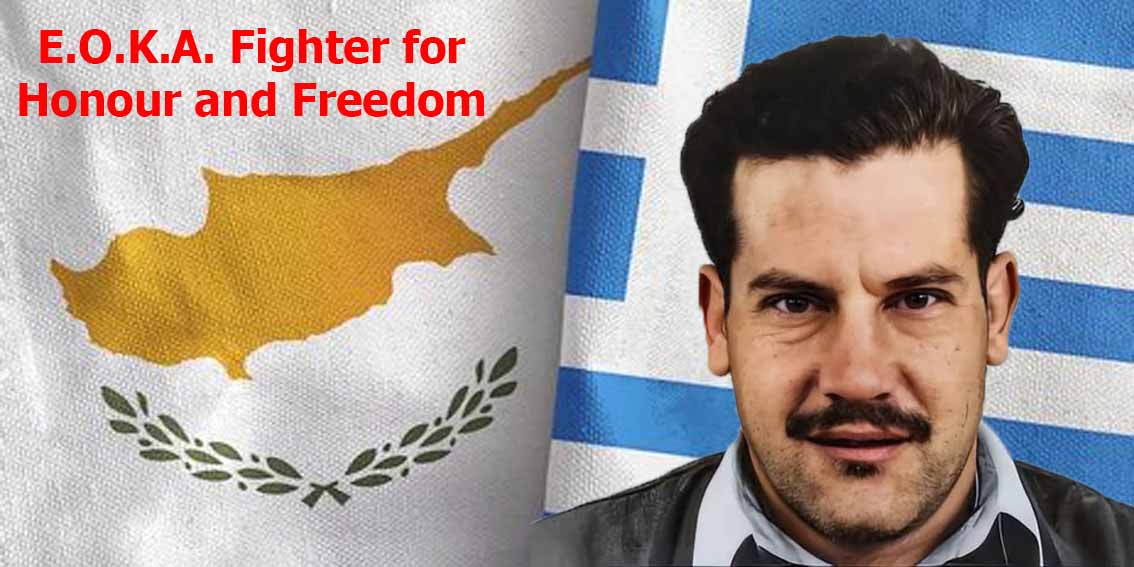
Theofilos Georgiadis entered the world on September 9, 1957, in Evrychou, a village in the Nicosia district of Cyprus. He grew up in a family carrying a proud resistance tradition—his father, Pampos Georgiadis, had fought against British colonial rule as an EOKA member. These memories of struggle and defiance shaped young Theofilos from his earliest years.
The 1974 Turkish invasion profoundly affected his family. Like thousands of Greek Cypriots, they abandoned their home and became refugees within their own country, settling in the “neutral” areas of Nicosia. This experience of displacement and occupation later fuelled his understanding of the Kurdish plight.
Education and Intellectual Formation
Theofilos Georgiadis served his military duty with the 32nd Commando Battalion, attaining the rank of Reserve Lieutenant. Also he helped found the Cyprus Commando Reserve Association and served as an active officer.
Between 1977 and 1981, he studied Political Science at Panteion University in Athens. He mastered the Turkish language and specialized in Turkology, continuing his studies in France and Germany. His linguistic abilities and deep understanding of Turkish politics made him uniquely qualified to analyse the region’s complex dynamics.
Discovering the Kurdish Cause
In 1986, Theofilos became the spokesperson for the Turkish Affairs Department at the Press and Information Office of the Republic of Cyprus. His main task involved studying the Turkish press and submitting reports to the government. During this period of researching Turkish history, he discovered the reality of Kurdistan and the Kurdish people’s struggle for freedom.
In the summer of 1987, he first encountered the Kurdish freedom movement when a movement member visited Cyprus for an anti-occupation event. A friend introduced them, and from that moment, a profound relationship began. When friends asked why he devoted his energy to the Kurds when Cyprus had its own struggle against Turkish occupation, he replied: “The situation of the Kurdish people is more urgent because of Turkish state oppression; the Kurds need to be free first, because their struggle is also our struggle.”
Founding the Cyprus Solidarity Committee for Kurdistan
In 1988, Theofilos Georgiadis, together with fellow patriots Lakis Piggouras and others, created the Cyprus Solidarity Committee for Kurdistan. The committee initially aimed to inform public opinion about the Kurdish issue. With limited resources, Theofilos also launched the Greek-language newspaper “Voice of Kurdistan” (Η Φωνή του Κουρδιστάν), covering developments in Kurdistan.
From this point onward, Turkish intelligence (MIT) placed him firmly in their sights. He became the primary source for Greek and Cypriot media on Kurdish affairs, with his interviews and statements frequently appearing on front pages and television screens.
A Vision of Common Struggle
Theofilos developed a powerful strategic vision: the freedom of Cyprus and the freedom of Kurdistan were intertwined. He famously declared that “the freedom of Cyprus passes through the mountains of Kurdistan.” He argued that since the Cypriot people had not undertaken their own national liberation struggle after 1974, they must help the Kurds who fight against their common enemy—the Turkish state.
He tirelessly toured every neighbourhood and village of Cyprus, giving lectures, holding meetings, and drawing attention to the massacres and oppression in Kurdistan. If today even the most remote Cypriot villages hold deep respect for the Kurdish freedom movement and its leadership, a large part of that credit belongs to Theofilos.
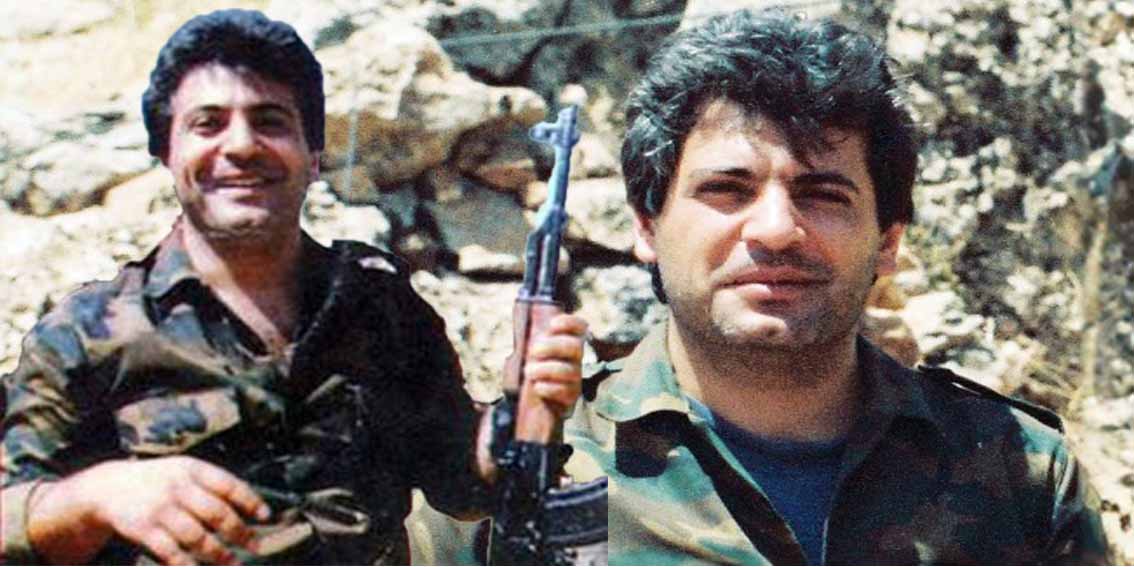
He also visited the training camps of Kurdish fighters and built strong relationships with the Kurdistan Workers’ Party (PKK) and the People’s Defence Forces. Abdullah Öcalan, the Kurdish leader, later described Theofilos as “our most valuable comrade” and “a bond of heart between peoples.”
The Final Days
On March 12-13, 1994, Theofilos Georgiadis participated in organizing the Brussels International Conference on Kurdistan, where attendees called him “the soul of the conference.” Participants condemned Turkey for genocide against the Kurdish people. He returned to Cyprus and immediately began preparations with his committee for Newroz (Nowruz) celebrations—the Kurdish New Year, symbolizing spring and resurrection.
On the morning of Sunday, March 20, 1994, he released his final text, written for the newspaper “Haravgi” to publish on Newroz day. He titled it “The Persecutions of Kurdish MPs and the Day of Nowruz.” In his last paragraph, he wrote: “Today, 21st March, the Kurdish people celebrate Nowruz (New Day), symbolizing spring, the transition from winter, with the melting of snow, to life with the coming of spring. Today Nowruz symbolizes the resurrection of the Kurdish people.”
Despite receiving multiple death threats signed by “Turkish Revenge Brigades” through mail and phone calls, he paid them no mind.
The Assassination
On the evening of March 20, 1994, at 10:15 PM, Theofilos returned home after greeting visitors from Brussels who had come for the Newroz festivities. He parked his car outside his home on Thoukydidou Street in the Aglantzia district of Nicosia.
As he stepped out of his vehicle, an assassin crept up from behind and fired five bullets at close range. The gunman escaped on a motorcycle. Theofilos clung to life for several hours but died in hospital shortly after. He was 37 years old and left three children behind.
The Assassins Revealed
The investigation revealed the involvement of Turkey’s deep state. The notorious Turkish ultranationalist Abdullah Çatlı, a key paramilitary figure, travelled to Cyprus and contacted drug trafficker Hassan Zorti to arrange the hit. Zorti attempted to hire another drug trafficker for 4,000 Cypriot pounds and 4 kilograms of heroin, but that man refused and informed the police.
Despite this warning, authorities did not place Theofilos under protection. Çatlı’s team then contacted another crime leader known as “Giouroukis” (Andreas Aristodimos), who assigned the task to his brother Kypros Aristodimos. A few months later, in June 1994, Andreas Aristodimos died near Limassol—someone eliminated him to prevent exposure of the Turkish state’s connection.
Legacy and Remembrance
The assassination shocked Cyprus and the international community. Government Spokesman Yiannakis Kasoulidis stated immediately: “This is a very bitter event and a political event. The first thing that comes to mind is Turkish agents.”
Today, Theofilos Georgiadis rests as a common hero of both the Greek and Kurdish peoples. Abdullah Öcalan called him “our great martyr.” A monument stands at the spot where he fell, and every year on the anniversary of his murder, officials, diplomats, politicians, and Kurdish representatives gather to lay wreaths and honour his memory. A Kurdish cultural centre in Cyprus bears his name.
In January 2022, the “Solidarity with the Kurds Initiative” launched in Cyprus, explicitly honouring Theofilos as “our symbol” who embodied the historical relations between the Kurdish and Greek peoples. The initiative declared: “Theofilos saw how the peoples of Kurdistan and Cyprus had been attacked by these occupying and hegemonic powers, arguing that the colonization and occupation of Kurdistan had also paved the way for the occupation of Cyprus. On this basis, he displayed solidarity with the Kurds and became a symbol of the Kurdish freedom struggle.”
Greek Defence Minister Panos Kammenos, speaking at a 2016 memorial service, stated: “Theofilos was the one who deconstructed the myth of an omnipotent Turkish state. He was the one who assumed a very hard task, to help the ethnic groups, whom Turkish propaganda had managed to put into conflict with one another, approach each other.”
Conclusion
Theofilos Georgiadis gave his life because he understood a profound truth: that oppressed peoples share a common enemy and must stand together. He did not live to see freedom for either Cyprus or Kurdistan, but his vision endures. His words remain as timely as ever: “Our assistance must be multifaceted. Starting from the political aspect, the Kurdish issue should be placed on the international stage by friendly countries like Cyprus; the terrorism of the Turkish state should be denounced, violations of human rights, and international pressure should be exerted by the international community on Kurdistan; practical, economic assistance should be provided to a people fighting, from all parties, organizations, and the people in general. Because they secure our safety.”
He fell on the eve of Newroz, a day symbolizing resurrection. Thirty years later, his spirit continues to inspire the struggle for the freedom of both his homelands.