The End of EOKA: Grivas Calls on Fighters to Lay Down Arms as Cyprus Secures Independence
The end of EOKA: On March 9th, 1959, Georgios Grivas, the legendary leader of EOKA, issued a final proclamation to his fighters. He declared his acceptance of the London-Zürich Agreements and ordered the dissolution of the National Organization of Cypriot Fighters. This moment marked the official end of the four-year armed struggle against British colonial rule. The fight for freedom had concluded, paving the way for the establishment of the Republic of Cyprus.
The Road to Zurich and London
The journey to this historic day began months earlier. During the last months of 1958, all parties had compelling reasons to seek a compromise. The Greek Cypriot side feared that partition was becoming increasingly imminent. Greece worried that the ongoing situation could lead to a devastating war with Turkey. Turkey faced its own crises on its eastern borders. The British did not want to see NATO destabilize because of a Greek-Turkish war.
On December 5th, 1958, the foreign ministers of Greece and Turkey acknowledged the common dangers from the continuing situation. A series of meetings followed, culminating in the Zurich and London Agreements. These negotiations produced a compromise solution in which Cyprus would become an independent and sovereign country.
The Agreements Take Shape
The agreements reached at Zurich on February 11th, 1959, and incorporated in London on February 19th, ended 82 years of British rule. The settlement of 1959 envisaged Cyprus becoming a republic with a regime specially adapted to the ethnic composition of its population. The agreements recognized a distinction between the two communities and sought to maintain a certain balance between their respective rights and interests.
Greece, Turkey, and the United Kingdom provided a multilateral guarantee of the basic articles of the constitution. The settlement also permitted the United Kingdom to retain sovereignty over two areas to be maintained as military bases, totalling 99 square miles in the vicinities of Dhekelia and Episkopi.
Grivas Accepts the Compromise
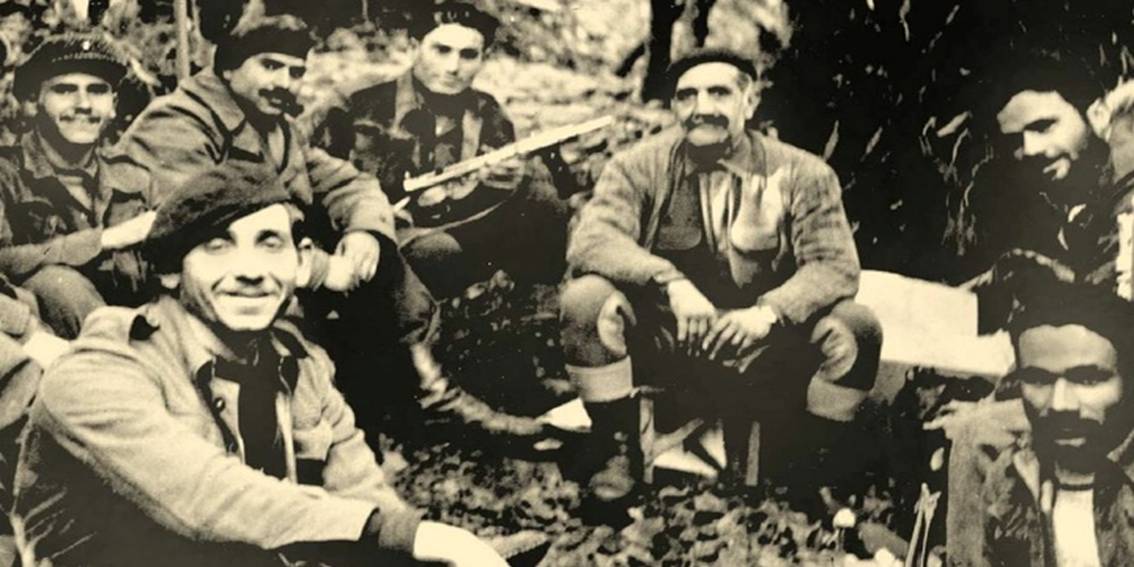
Both Makarios and Grivas accepted the deal with heavy hearts. Grivas, who had led the guerrilla campaign from the mountains and safe houses across Cyprus, recognized that the agreements represented the best achievable outcome. On March 9th, 1959, he issued a leaflet declaring his acceptance of the London Agreements and ordering the end of EOKA.
The active struggle between the British and the EOKA organization officially ended in March 1959. The four-year campaign had cost hundreds of lives. According to historian David Carter, EOKA’s actions resulted in the deaths of approximately 393 people, including British armed forces, police, and civilians. On the other side, 85 to 91 EOKA guerrillas died at the hands of British forces.
A Conditional Freedom
While the end of the armed struggle brought celebration, the independence that followed came with conditions. The agreements that ended the fight had their roots in negotiations between Greece, Turkey, and Britain. The Greek and Turkish Cypriot communities had no serious role in drafting either the agreements or the constitution for the new republic.
In effect, both the agreements and the constitution were imposed on the people of Cyprus. As a result, the fate of the new republic was jeopardized in vitro. Certain provisions, rather than promoting peace through intercommunal solidarity, proved conducive to domestic conflict and foreign interference. The Republic of Cyprus received a fettered independence and dysfunctional constitutional arrangements.
The Transition Period
A protracted and highly complicated transition ensued before the independent Republic of Cyprus finally arrived in August 1960. During this period, the British, Greek, and Turkish governments worked to implement the agreements. A Joint Constitutional Commission sat in Nicosia after mid-April 1959 to draw up the constitution. Greece, Turkey, Greek Cypriot representatives, and Turkish Cypriot representatives did the painstaking work of craftsmanship .
The Constitutional Commission completed its arduous work on July 6th, 1960, the same day as the finalization of the agreement on bases. This allowed Queen Elizabeth II to issue an Order in Council authorizing the change of sovereignty to take place the following month.
Independence Achieved
On August 16th, 1960, Cyprus finally became an independent, sovereign republic. The Republic joined the United Nations one month later. The constitution came into effect on the day of independence, with its roots in the agreements reached the previous year.
Sir Hugh Foot, the last British Governor, aptly summed up what was really happening when he spoke of the transition “from colonial rule to Agreement rule”. When that Agreement effectively collapsed at the beginning of 1964, no state machinery existed to pick up the pieces, except in a very partial and divisive manner.
The Legacy of the Struggle
For the fighters of EOKA, March 9th, 1959, represented both an end and a beginning. Their four-year campaign had succeeded in ending British colonial rule, though it fell short of their ultimate goal of Enosis—union with Greece. Makarios had announced in 1958 that he would accept independence rather than Enosis. The agreements expressly forbade both the union of Cyprus with any other state and the partitioning of the island.
The Turkish Cypriot leadership, in contrast to the Greek Cypriots, greeted the compromise with enthusiasm. They had achieved recognition as a separate community with constitutional protections; though not the partition some had sought.
Grivas’s Later Years
Grivas himself did not fade from history after March 1959. He returned to Cyprus twice, in 1964 and 1971, becoming the founder of EOKA-B. The actions of this new organization would prove far more deleterious for the future of the island than its prototype. Grivas died on January 27th, 1974, in semi-hiding, surrounded by mystery and intrigue as to his real intentions.
A Day to Remember
March 9th, 1959, stands as a pivotal date in Cypriot history. On that day, the guns fell silent. The young men who had hidden in the mountains, the students who had thrown stones at British soldiers, the families who had sheltered wanted men—all could begin to imagine a normal life. The road ahead would prove difficult, with new challenges emerging from the very agreements that brought peace. But for that moment, Cyprus could celebrate: the fight for freedom had ended, and independence awaited just over the horizon.