
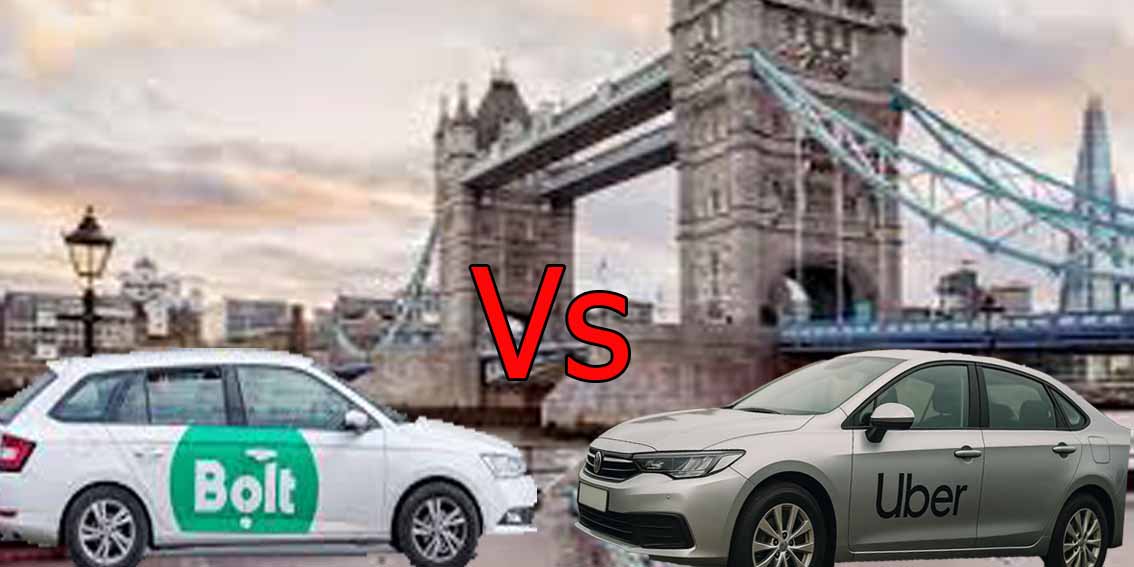
A Comprehensive Comparison of Pricing, Coverage, and Service Quality
Bolt vs Uber: Uber Taxi Service is yet to come to Cyprus but this is interesting information if you travel to UK.
Uber and Bolt dominate the ride-hailing market in the United Kingdom. Both offer app-based booking, upfront pricing, and cashless payments. But significant differences exist in pricing, coverage areas, driver commissions, and customer service. Understanding these distinctions helps users choose the right platform for their journey.
Pricing Comparison: Who Offers Better Value?
Fares fluctuate depending on journey length, time of day, and demand. A direct comparison of two sample journeys in London reveals surprising variations.

London Victoria to London Euston (short journey):
Bolt: £15.40 total fare
Uber (UberX): £11.91 total fare
London Kings Cross to Heathrow Terminal 2 (long journey):
Bolt: £44.90 total fare
Uber (UberX): £62.92 total fare
Uber proved cheaper for the shorter central London journey on this occasion, while Bolt offered significantly better value for the longer airport trip. This demonstrates the importance of checking both apps for any given journey, as either provider can emerge as the cheapest option.
Both companies calculate fares using a base fee, distance rate, time rate, and applicable surcharges including airport charges, congestion fees, and toll road fees. Dynamic pricing applies on both platforms, meaning journeys may cost more during peak times or when demand exceeds driver supply.
UK Coverage Areas
Bolt operates in the following UK locations:
London, including major airports, Birmingham, Bristol and Bath, Buckinghamshire, Cambridge, Windsor and Maidenhead, Cardiff
Derby, Edinburgh, Greater Manchester, Leicester, Milton Keynes
Newcastle, Nottingham, Peterborough, Portsmouth, Sheffield, Southampton
Uber covers these UK areas:
London and airports, Cambridge, Birmingham, Leicester, Nottingham, Stoke, Leeds, Manchester, Liverpool and Merseyside, Newcastle, Sheffield, Belfast, Edinburgh, Glasgow, Brighton and Sussex, Portsmouth, Bristol, Cardiff and Home Counties
Both services maintain a strong presence in major cities, though Uber’s longer establishment in the UK gives it a slight edge in certain regions.
Market Presence and User Base
Uber remains the dominant player in the UK market. In Q2 2025, Uber’s weekly downloads started at approximately 97,000 and peaked at 131,000 by the end of June. Its weekly active users grew from 5.9 million to about 6.8 million over the quarter.
Bolt holds second place among UK ride-hailing apps. Its downloads began at 44,000 in Q2 2025, climbing steadily to reach 54,000 by the quarter’s end. The active user base grew significantly from 1.1 million to 1.4 million, indicating strong user retention and engagement.
Driver Commissions and Earnings
Bolt charges drivers a lower commission of 15-20% per ride. This potentially translates to lower passenger fares and better driver earnings. However, because Uber maintains a wider network of drivers, passengers may experience shorter wait times on the Uber platform.
Uber charges drivers a higher commission of approximately 25%. Following a Supreme Court ruling in 2021, Uber provides its drivers with worker protections including a pension, holiday pay, and the national living wage. Law firm Leigh Day is currently seeking the same worker protections for more than 10,000 Bolt drivers, with a hearing scheduled to begin.
Driver Support Comparison
Bolt offers faster and more personalised support according to driver feedback. Response times typically range from 12-24 hours for routine issues, giving Bolt a slight edge over Uber. Bolt’s phone support, available at 0808 169 8818, can sometimes resolve matters in a single call. The company actively engages with drivers through Zoom Q&A sessions and community events, making the platform feel more approachable.
Uber provides more comprehensive support infrastructure including 24/7 phone support at 0808 189 7190 and physical Greenlight Hubs where drivers can speak face-to-face with representatives. However, many drivers report slow or robotic responses, often feeling that support agents did not fully read their messages. Response times typically range from 24-48 hours.
Uber wins for appeals and deactivations. The company offers a structured appeals process allowing drivers to submit additional evidence such as dash cam footage and trip screenshots. Bolt’s appeal process is less clear, and reactivations are rare once deactivation occurs.
Passenger Experience and Common Complaints
Both platforms receive complaints about driver conduct, pricing disputes, and customer service.
Uber passenger ratings vary by city. Belfast passengers hold the highest average rating at 4.91, while Bristol passengers rank lowest at 4.7. London passengers average 4.75, placing them second-lowest nationally. Drivers deduct points for rude behaviour, lateness, eating in the car, and changing destinations mid-trip.
A Manchester passenger recently complained about a £47 charge for a ten-minute journey that initially quoted £12. Uber refunded the amount and offered a £5 goodwill gesture, explaining that the pick-up location changed after booking, which impacted the fare.
Bolt faces criticism over customer service and fare disputes. One passenger reported a driver taking an unnecessarily long route, resulting in a fare 70% higher than expected. Despite support confirming the driver took wrong directions, Bolt refused a refund.
A customer complaint highlighted Bolt’s terms and conditions, which state that the contract exists between passenger and driver, not Bolt. Since payment goes through Bolt, the company decides disputes, leaving passengers with limited recourse when issues arise.
Safety Features
Bolt vs Uber: Both companies prioritise safety with similar features. Passengers can share their trip in real-time with friends and family. An emergency contact function exists within both apps. Drivers undergo licensing checks by local authorities, and the apps track all journeys.
Key Features Comparison
Bolt features:
Book rides via Smartphone app
View driver and vehicle details before pickup
Add multiple stops to journeys
Save favourite locations for quicker booking
Contact driver before arrival
Share trip with friends
Cancellation option with fees
Uber features:
Book rides via smartphone app
View driver and vehicle details before pickup
Add multiple stops to journeys
Save favourite locations
Contact driver and share trip
Request larger vehicles for luggage
Request zero-emission trips (25% of London miles are fully electric)
Book train and coach tickets through the app
Verdict Which Should You Choose?
Choose Bolt if:
You want potentially lower prices, especially for longer journeys
You prefer a platform with lower driver commissions
Faster customer service response times matter to you
Choose Uber if:
You want more reliable driver availability and shorter wait times
You prefer transparent fare breakdowns
You value structured appeals processes and worker protections for drivers
You want integrated transport options like train and coach booking
The smart approach: Check both apps before booking. Prices vary significantly by journey, time, and location. Having both apps installed gives you flexibility and the ability to choose the best option for each trip.