
A Delicate Spring Bloom
Hypecoum Wild Flower is a member of the poppy family, graces the Cypriot countryside with its presence each spring. Often overlooked due to its small size and short flowering period, this charming wildflower reveals intricate beauty upon close inspection.
Classification and Name
Botanists classify Hypecoum within the Papaveraceae family, the same family as poppies. The genus comprises about 15-18 species of annual herbs, distributed from the Mediterranean region through temperate Asia. In Cyprus, the native species is Hypecoum procumbens subsp. procumbent . This plant carries the common name “fumewort” in some regions, though it remains best known by its scientific name.
Distinctive Appearance
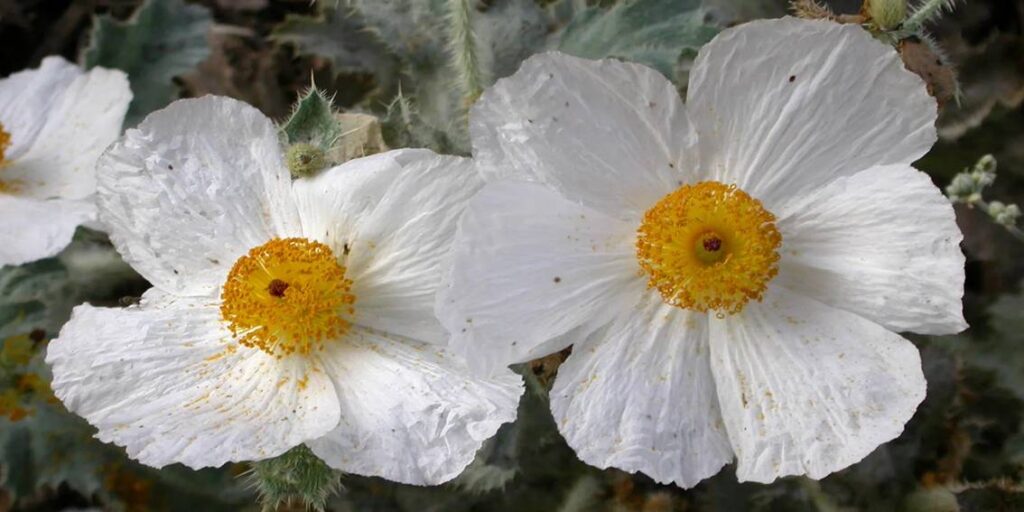
The Hypecoum wild flower presents a unique and intricate structure. Four petals form the bloom, arranged in two distinct pairs. The outer petals are usually three-lobed and spread outward, while the inner petals are deeply divided into three parts, with a spoon-shaped middle lobe often fringed with tiny hairs. The flowers are typically a soft, pale yellow, though some species elsewhere exhibit different colours. At the base of the flower, two tiny sepals soon fall away as the bloom opens. Below the flower, the leaves form a basal rosette close to the ground, each leaf finely divided into narrow, thread-like segments, giving the plant a delicate, ferny appearance.
Habitat and Distribution
The Hypecoum procumbens subspecies thrives in the eastern Mediterranean, with its range extending to Cyprus, Turkey, and Greece. In Cyprus, you can find it growing in open, low-altitude habitats. It favours fallow fields, roadsides, sandy or rocky ground, and other disturbed areas where competition from larger plants remains minimal. As an annual plant, it completes its entire life cycle quickly during the moist, mild spring months, setting seed before the intense summer drought arrives.
The Secret of Its Fruit
The name Hypecoum holds a clue to one of its most fascinating features. The plant produces a long, slender seed capsule. Inside, partitions divide the capsule into segments, each containing a single seed. When mature, this capsule breaks apart transversely into one-seeded sections, a characteristic that gives the genus its Chinese name, meaning “jointed fennel”. This clever adaptation helps disperse the seeds more effectively.
A Fleeting Beauty
Like many annuals in the Mediterranean climate, Hypecoum follows a strategy of haste. It germinates with the winter rains, flowers briefly in spring, and sets seed before the landscape turns brown. You must time your visit carefully to see this delicate flower, as its blooming period is short. Look for it in March and April, carpeting the ground with its yellow stars, a small but perfect jewel of the Cypriot flora.