A Stone Single Arch Bridge
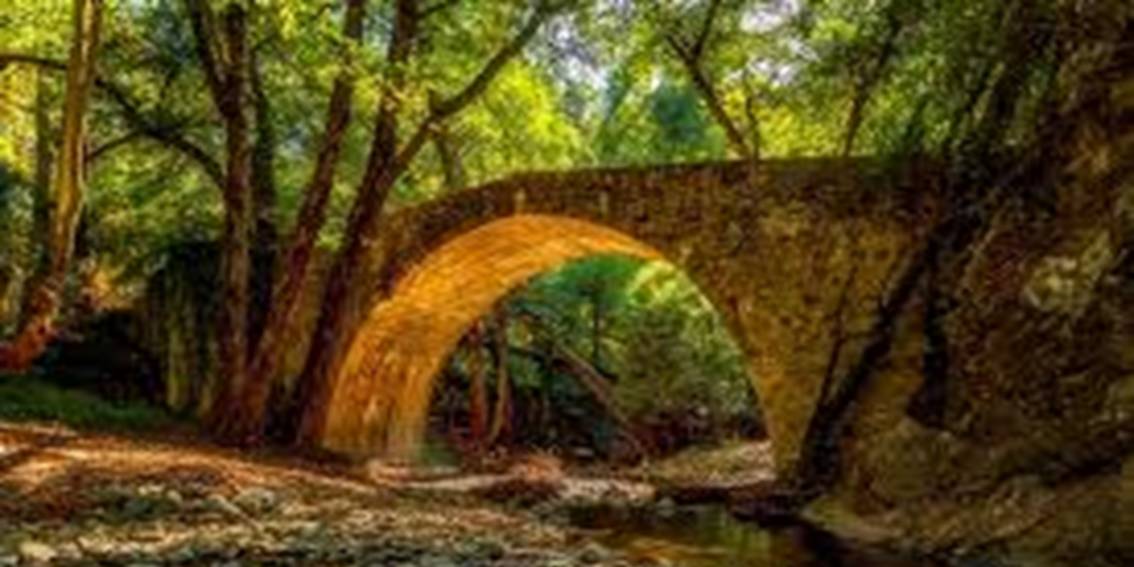
The Venetian bridge Roudia (Gefiri tou Roudia) is a 16th-century, single-arch Venetian stone bridge nestled in the Paphos Forest near the Xeros River in Cyprus. Known for its quiet, scenic setting, it is less crowded than the Tzielefos bridge, often reached via a 4×4 route from the deserted Vretsia village. It serves as a historic,, picturesque landmark surrounded by pine trees and lush vegetation
A Strategic Construction
In the 16th century, the Venetian rulers of Cyprus commissioned the Roudia Bridge. They needed a reliable river crossing in the Troodos Mountains to facilitate the vital transport of copper and agricultural goods. Local craftsmen built the structure from the region’s abundant limestone, creating a single, elegant arch. The bridge served the bustling trade route between the mines of the mountains and the coastal port of Paphos.
Architectural Form and Function
The bridge showcases a classic Venetian design. Its single arch spans approximately 13 meters across the Diarizos River. Builders employed a semicircular shape, a hallmark of Venetian engineering, which effectively distributed weight and withstood strong river currents. Sturdy parapets line the walking path, protecting travellers and their pack animals. The structure’s simple, robust form blends seamlessly with the rugged landscape, a testament to functional design.
A Changing Role
For centuries, the Roudia Bridge supported the local economy. Mule trains and merchants regularly crossed its path. However, the decline of the mining industry and the eventual development of modern roads reduced its practical importance. The bridge transitioned from a crucial commercial artery to a historical monument. Today, the surrounding area sees little vehicular traffic, allowing the quiet beauty of the old structure to dominate the scene.
The Bridge Today
Visitors now seek out the Venetian Bridge Roudia primarily for its historical charm and picturesque setting. A scenic nature trail leads hikers to the site through dense foliage. The bridge stands solidly over the often dry or trickling riverbed, framed by pine trees and rugged slopes. People walk across its worn stone path, touching the same surfaces that countless merchants and miners touched centuries ago. The location offers a profound sense of connection to the island’s Venetian past.
A Legacy in Stone
The Department of Antiquities officially protects the Roudia Bridge as an important cultural heritage site. Although time has weathered its stones, the structure remains largely intact, requiring only minimal conservation to preserve its integrity. It stands as one of several surviving Venetian bridges in Cyprus, each a physical reminder of a specific colonial era that shaped the island’s infrastructure. The bridge no longer serves copper caravans, but it steadfastly carries the weight of history, offering a silent, stone narrative of trade, engineering, and enduring beauty in the Cypriot countryside.