

Understanding Gouty Arthritis
Gouty arthritis is a type of arthritis caused by the accumulation of uric acid crystals in the joints, triggering inflammation. It affects millions worldwide and often appears suddenly, causing intense joint pain.
How Gout Develops
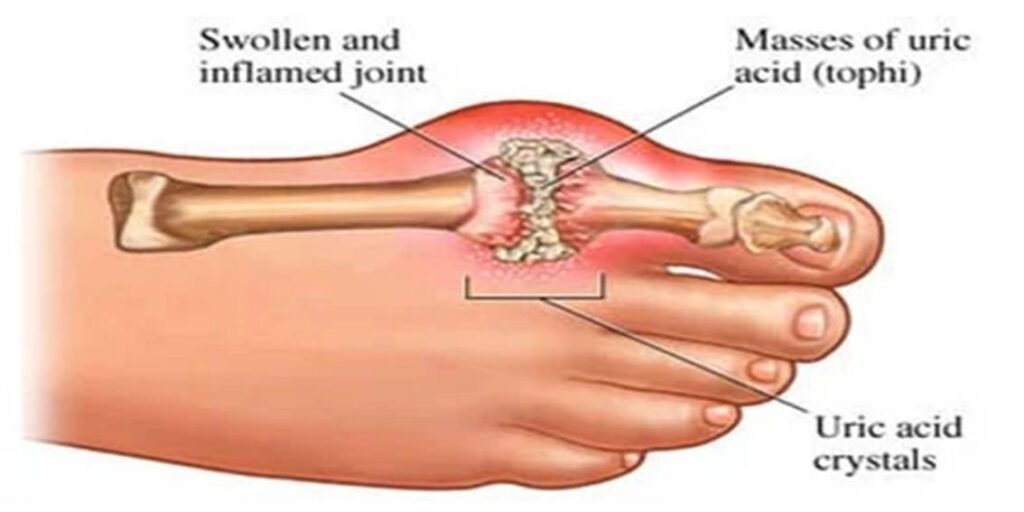
When your body breaks down purines—natural substances found in many foods and your own cells—it produces uric acid. Normally, your kidneys filter and remove uric acid through urine. But if your body produces too much uric acid or kidneys don’t eliminate enough, uric acid levels rise in your blood. This condition, called hyperuricemia, leads to uric acid crystal deposits in joint tissues.
Gouty arthritis is a painful form of inflammatory arthritis. It develops when high levels of uric acid in the blood form sharp crystals inside and around a joint. The body produces uric acid when it breaks down purines, which are chemicals found naturally in the body and in certain foods.
Symptoms of Gouty Arthritis
Gout attacks usually start with a sudden, severe pain in one joint, most commonly the big toe. The joint becomes red, swollen, warm to touch, and extremely tender. Attacks often occur at night and can last from a few days to weeks. Over time, untreated gout can affect multiple joints and cause joint damage or tophi, which are lumps formed by urate crystal deposits under the skin.
People can prevent gout attacks by managing their weight, choosing a healthy diet, limiting alcohol, and taking prescribed medications when necessary.
Understand the Role of Diet and Hydration
Diet changes can lower the risk of new gout attacks and slow joint damage. Limit foods high in purines, including organ meats, red meat, and certain seafood like anchovies and sardines. Cut back on sugary drinks and foods with high-fructose corn syrup, because sugar increases uric acid production. Stay well hydrated by drinking enough water to help your body flush out uric acid. Some research suggests that vitamin C supplements and coffee may help lower uric acid levels, so ask your healthcare professional whether these options suit you.
Manage Weight and Alcohol Intake
Excess weight raises the risk of developing gout. Research shows that losing weight by cutting calories can lower uric acid levels and reduce the number of gout attacks, even without a strict purine-restricted diet. Alcohol, especially beer and distilled liquors, links to a higher risk of gout and more frequent attacks. Avoid alcohol completely during gout attacks and limit intake between attacks.
Take Preventive Medications as Prescribed
Doctors prescribe uric acid-lowering medicines for people who have frequent attacks or high uric acid levels. Allopurinol and febuxostat work by blocking the body’s production of uric acid. Take these medicines regularly, even when you no longer feel symptoms. These medications can trigger gout flares when you first start taking them, so doctors often prescribe low-dose anti-inflammatory medicines to prevent flares during that period. Discuss any medication decisions with your healthcare professional to find the right approach for your situation.
Symptoms of Gouty Arthritis
Gout attacks usually start with a sudden, severe pain in one joint, most commonly the big toe. The joint becomes red, swollen, warm to touch, and extremely tender. Attacks often occur at night and can last from a few days to weeks. Over time, untreated gout can affect multiple joints and cause joint damage or tophi, which are lumps formed by urate crystal deposits under the skin.