A Legacy Etched in Stone and Water
The Platanistasas watermill stands as a powerful testament to the ingenuity of rural Cyprus. Nestled within a verdant valley, the mill harnesses the relentless flow of the local stream, transforming natural energy into essential labour. This structure is not merely a ruin; it is a sophisticated machine that speaks to centuries of human adaptation.
The Ingenious Mechanism
The mill’s genius lies in its elegant simplicity. Builders carved a steep, narrow channel, or lagumi, into the bedrock to divert water from the river. The water accelerates as it descends this chute, striking the blades of a large, vertically-mounted wooden wheel with tremendous force. This impact rotates the wheel, turning a central axle connected to heavy stone millstones inside the building. Gravity and hydraulics do the heavy lifting, not electricity. As the stones rotate, they grind wheat or barley into flour, a rhythmic process that once formed the heartbeat of the local economy.
An Architectural Dialogue
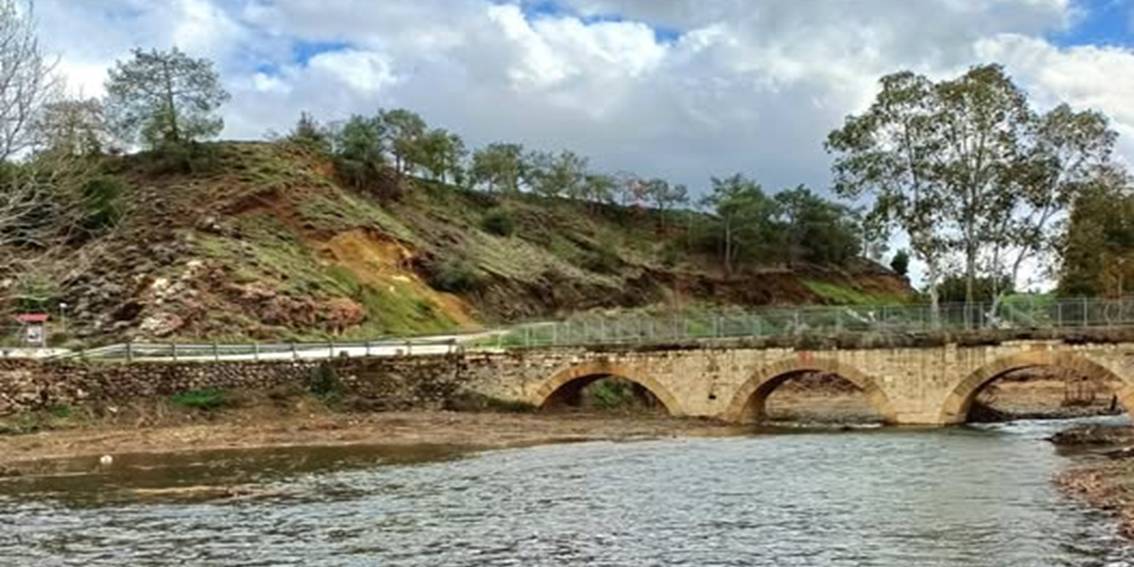
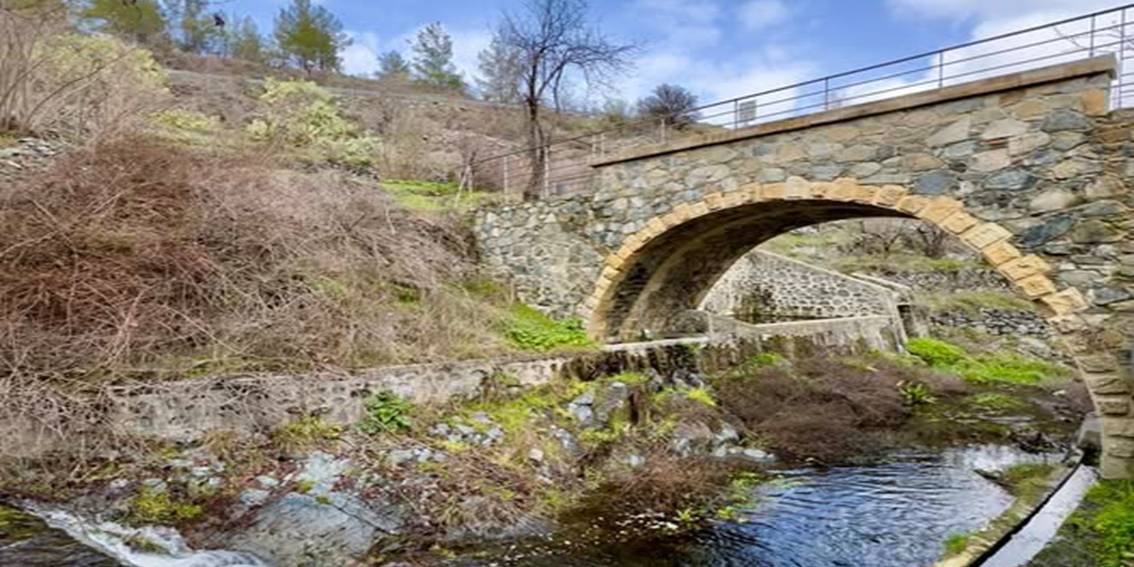
Walking through the site today, one observes a fascinating architectural conversation. The lower sections feature robust local stone, expertly fitted to withstand constant moisture and the vibration of the machinery. Higher up, builders used sun-dried mud bricks and timber, lighter materials ideal for the superstructure. A surviving arched bridge, constructed from the same river stone, carries the water channel over a public pathway. Every element serves a dual purpose: function dictates form, yet the craftsmanship imbues the utilitarian design with undeniable beauty.
The Social Heartbeat
For generations, the Platanistas watermill functioned as a vital social hub. Farmers did not merely bring their sacks of grain to process; they came to exchange news. The miller, a central figure in the community, took a portion of the flour as payment. The constant murmur of the water mixed with human voices, creating a unique soundscape of commerce and camaraderie. The mill provided a rare neutral ground where villagers from surrounding districts met, shared stories, and maintained the social fabric of rural life.
Decline and Quiet Revival
The technological advances of the 20th century rendered the watermill obsolete. Diesel engines and electric roller mills processed grain faster and cheaper, forcing the water-driven stones to fall silent. The Platanistas mill fell into disrepair, its wheel rotting and its walls crumbling.
However, the story does not end there. Recent restoration efforts focus on preserving the structural integrity and interpreting the site for visitors. Volunteers clear debris from the water channel and stabilise the masonry. They have reconstructed the wooden wheel based on historical evidence. While the mill no longer produces commercial flour, the water once again turns the wheel. The sound of splashing and grinding has returned, not as industry, but as history, memory, and a tribute to Cypriot resilience.